Gas house, Shapinsay
Balfour Village Gasometer
Key Facts
Shapinsay's distinctive planned landscape reflects the agricultural improvements introduced during the nineteenth century by laird David Balfour. Building on work begun by his grandfather, Major Thomas Balfour, David transformed the island, developing Balfour Village with new housing, a pier, a grain mill, a smithy and a gasworks. Today, the gasometer is the only surviving part of this ambitious project.
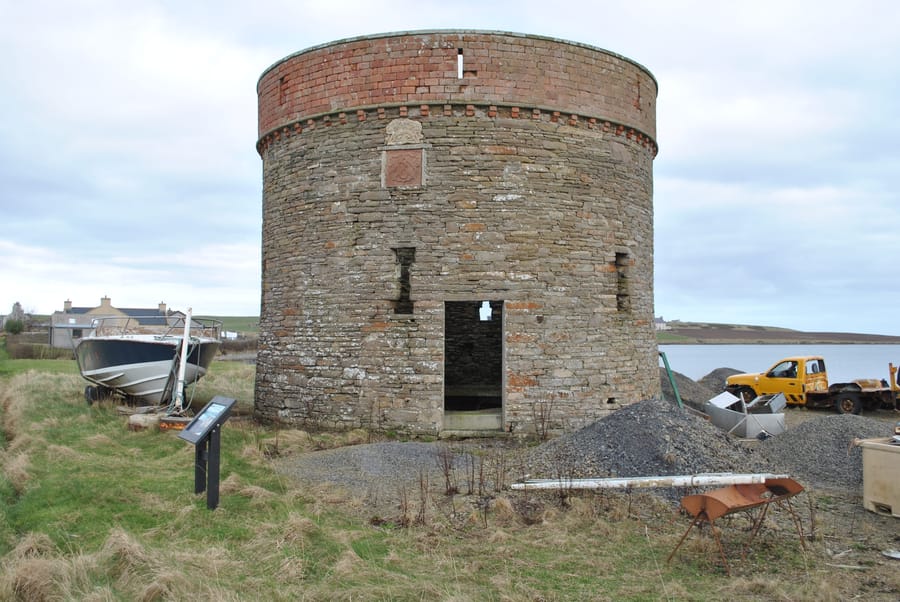
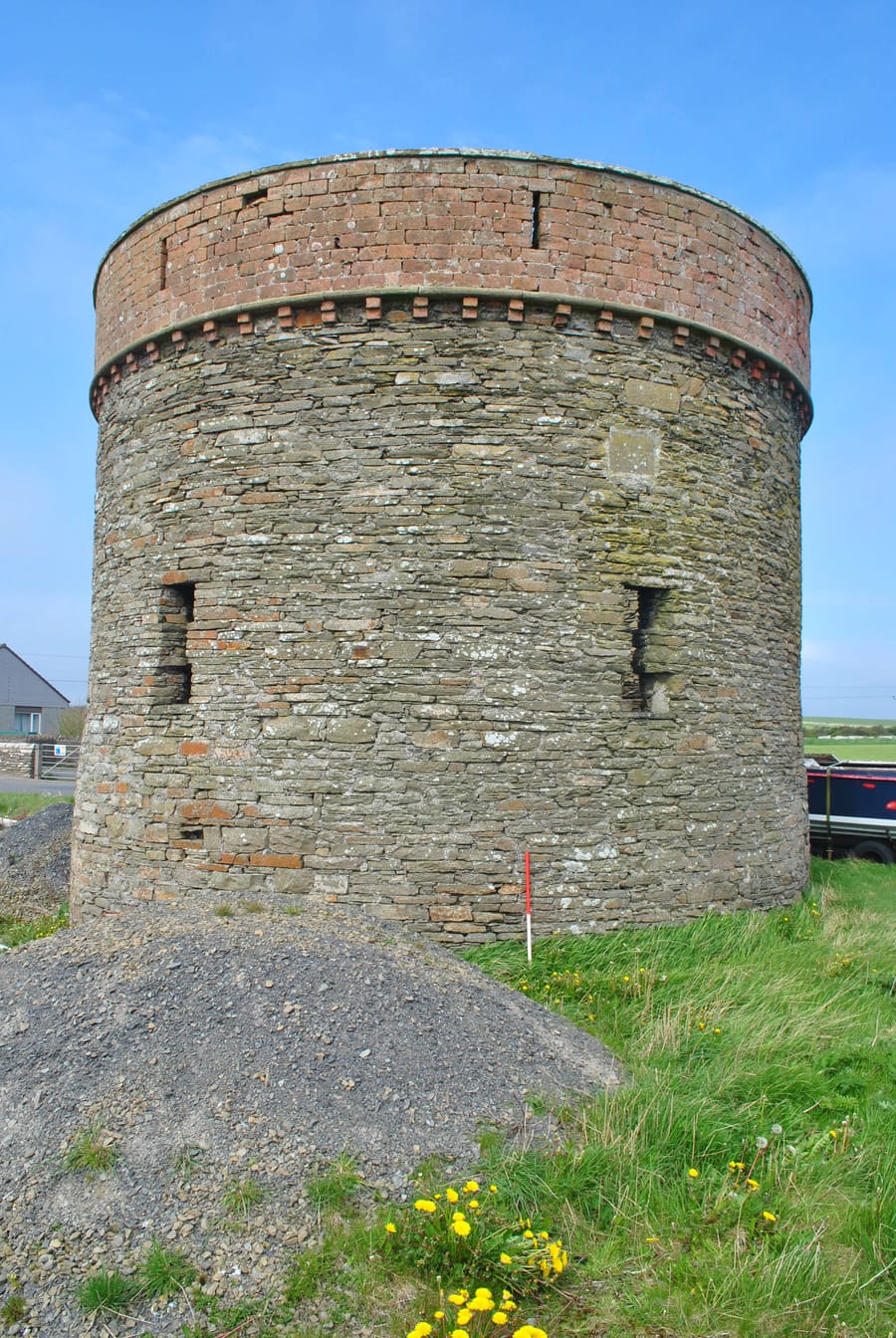
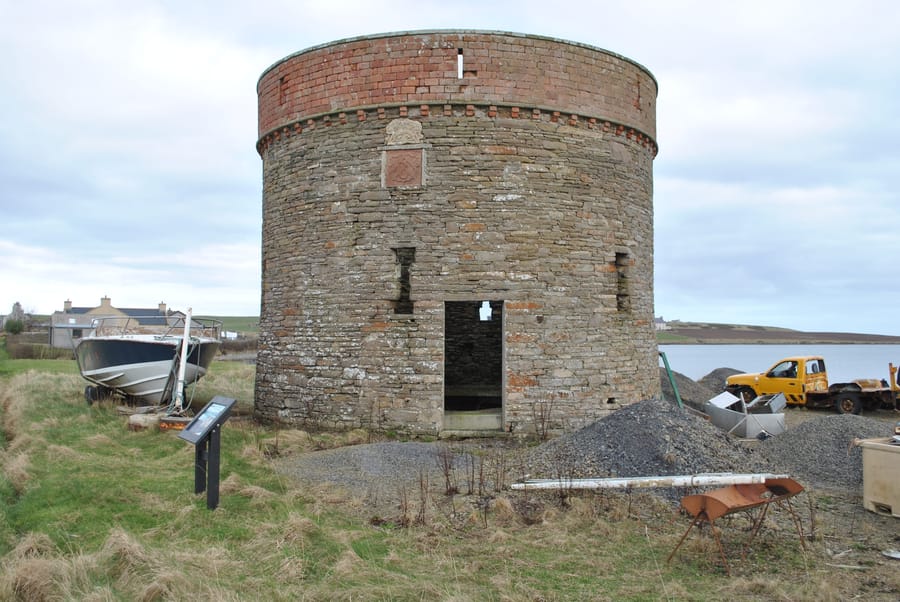
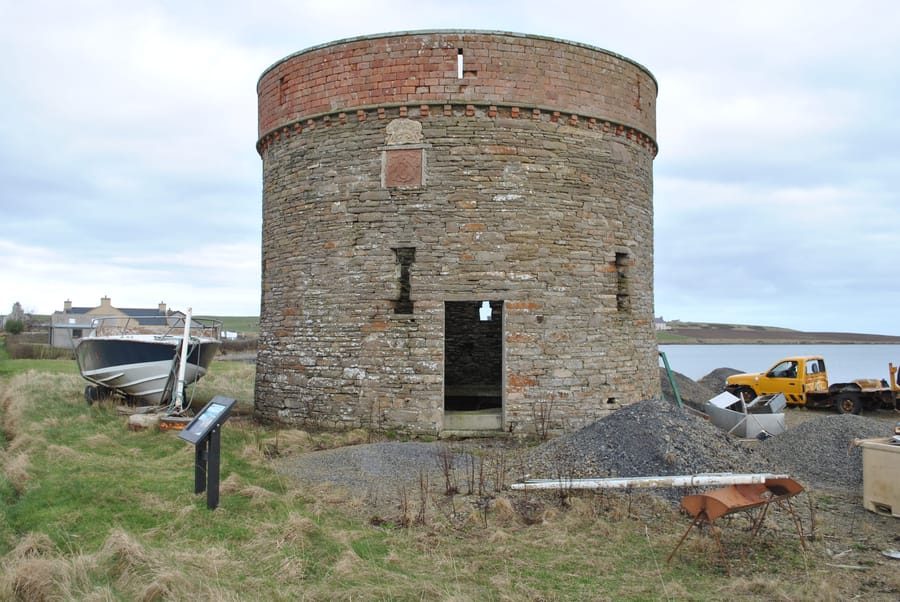
Constructed between 1856 and 1861, the gasworks supplied coal gas for lighting Balfour Castle, the village and the pier. The gasometer, built from stone brought from Noltland Castle in Westray, was designed to resemble a defensive tower, giving it a striking and unusual appearance.
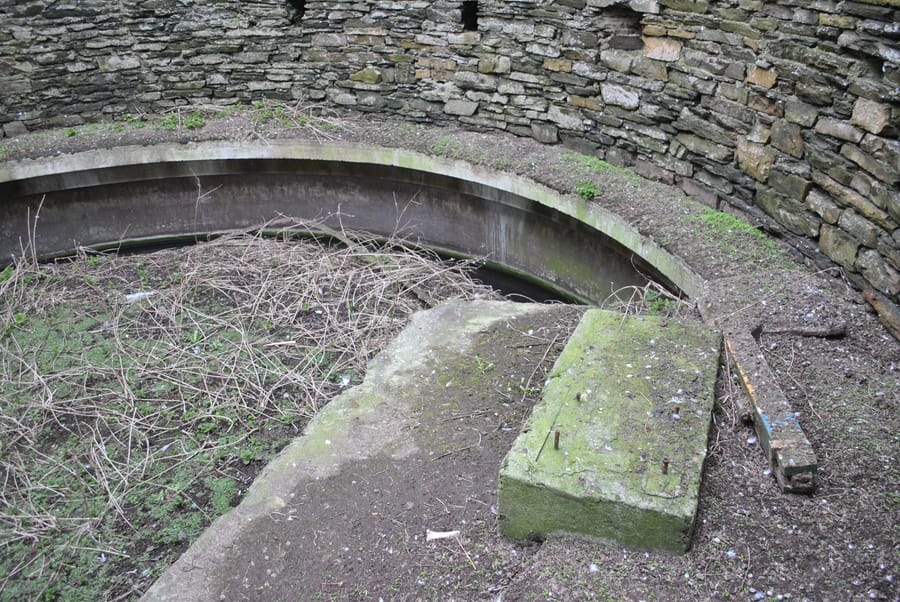
Coal gas was produced by heating coal in sealed chambers and storing the resulting gas in a large movable vessel known as a bell. Suspended within a guide frame and sealed by water, the bell rose and fell according to the volume of gas being stored. This ingenious system ensured a reliable supply for the settlement's lighting network.
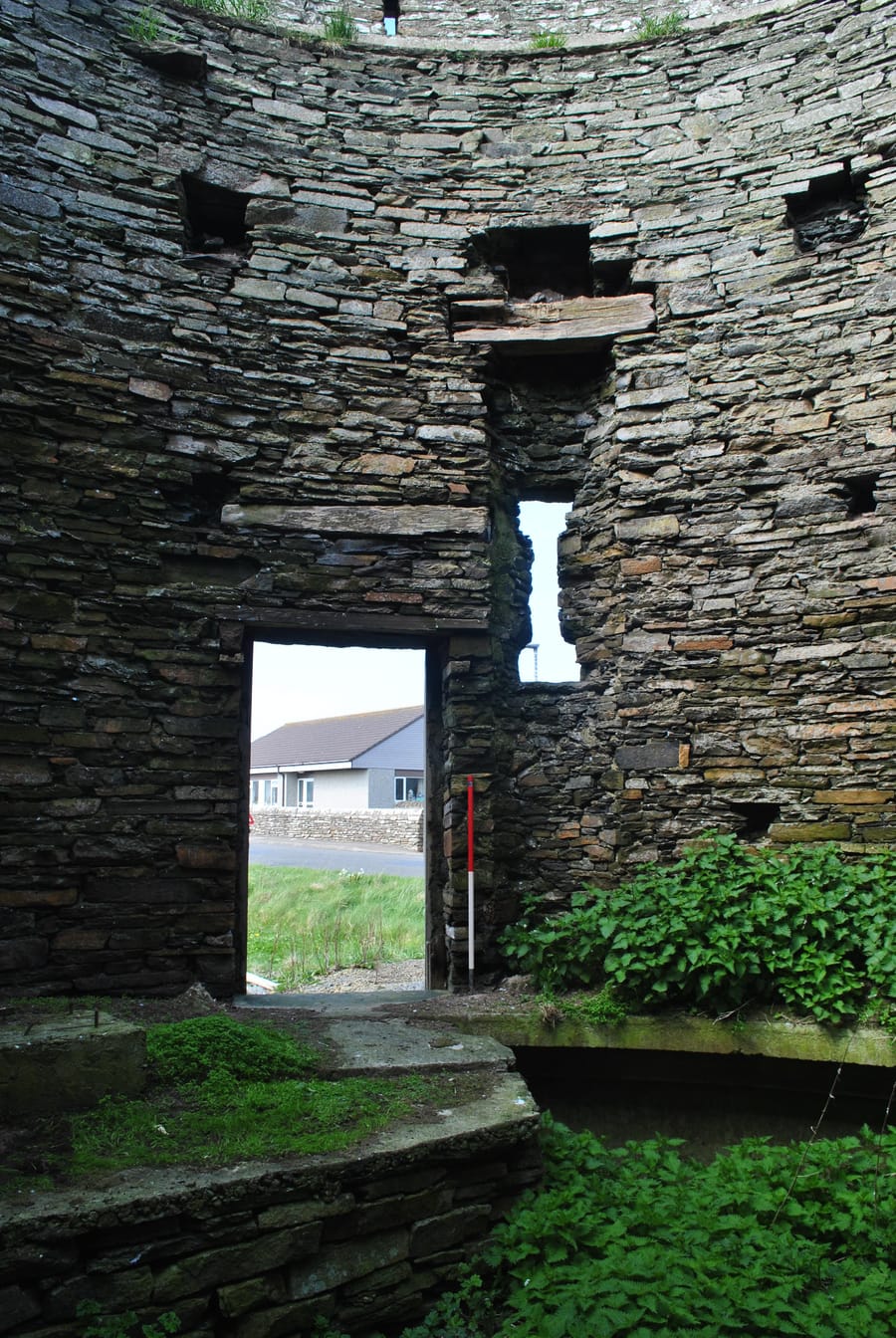
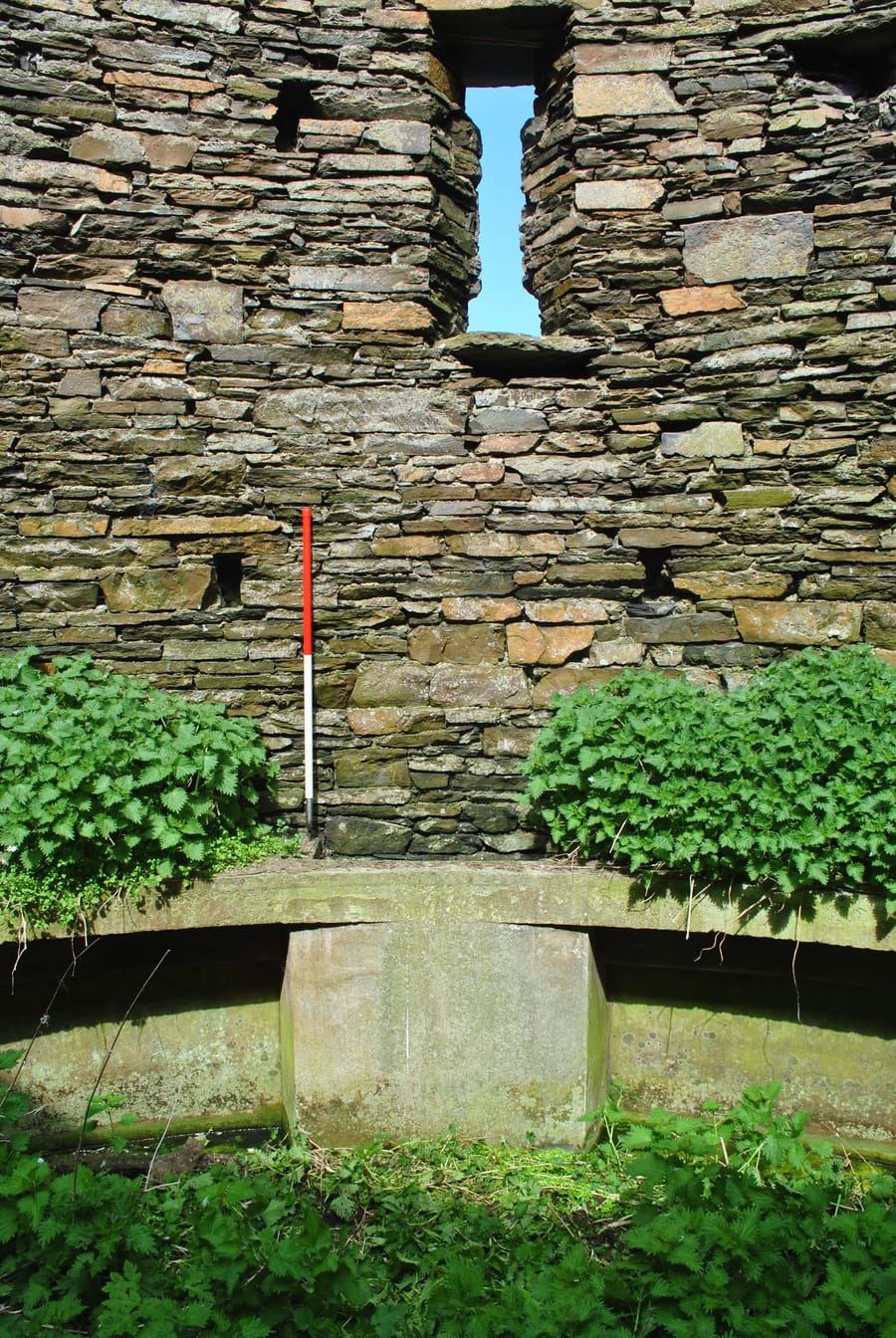
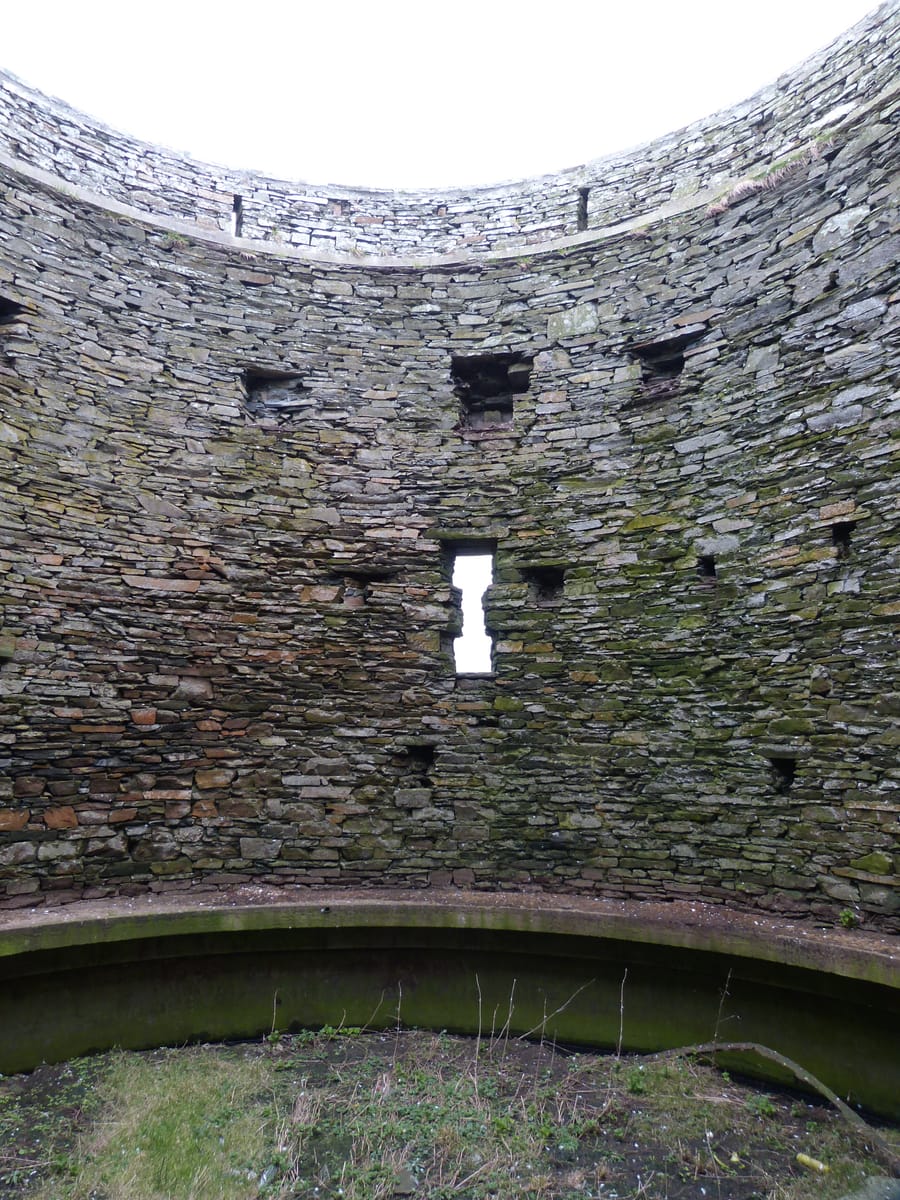
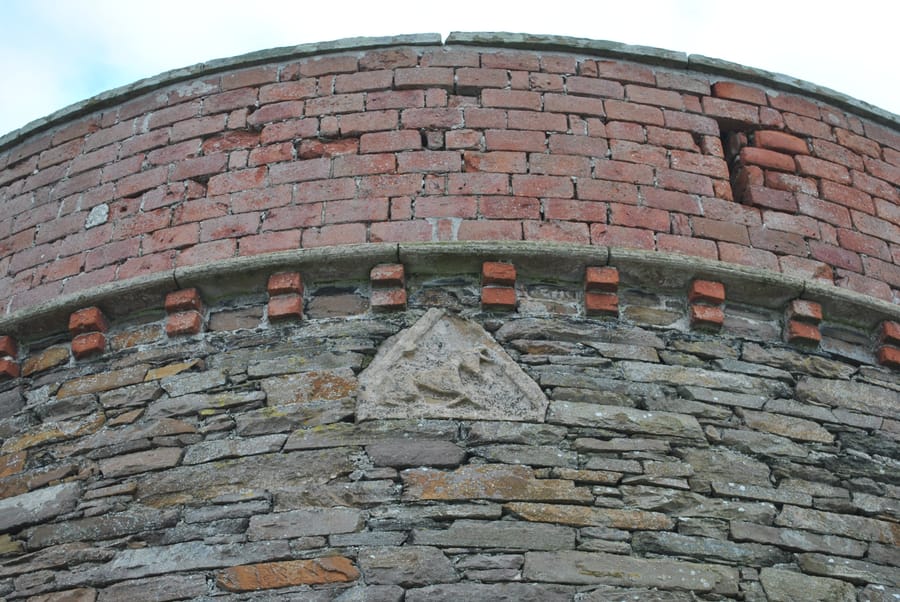
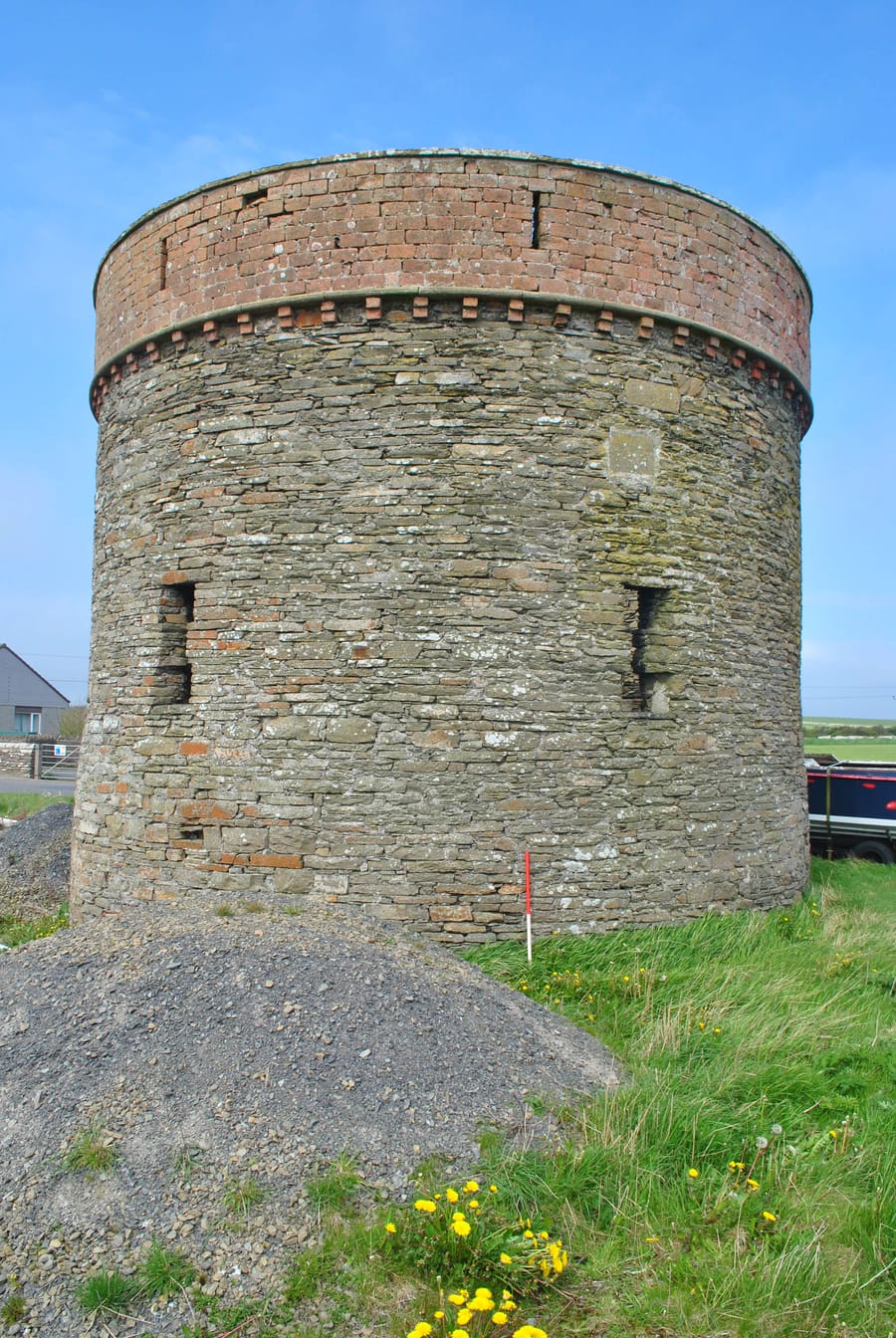
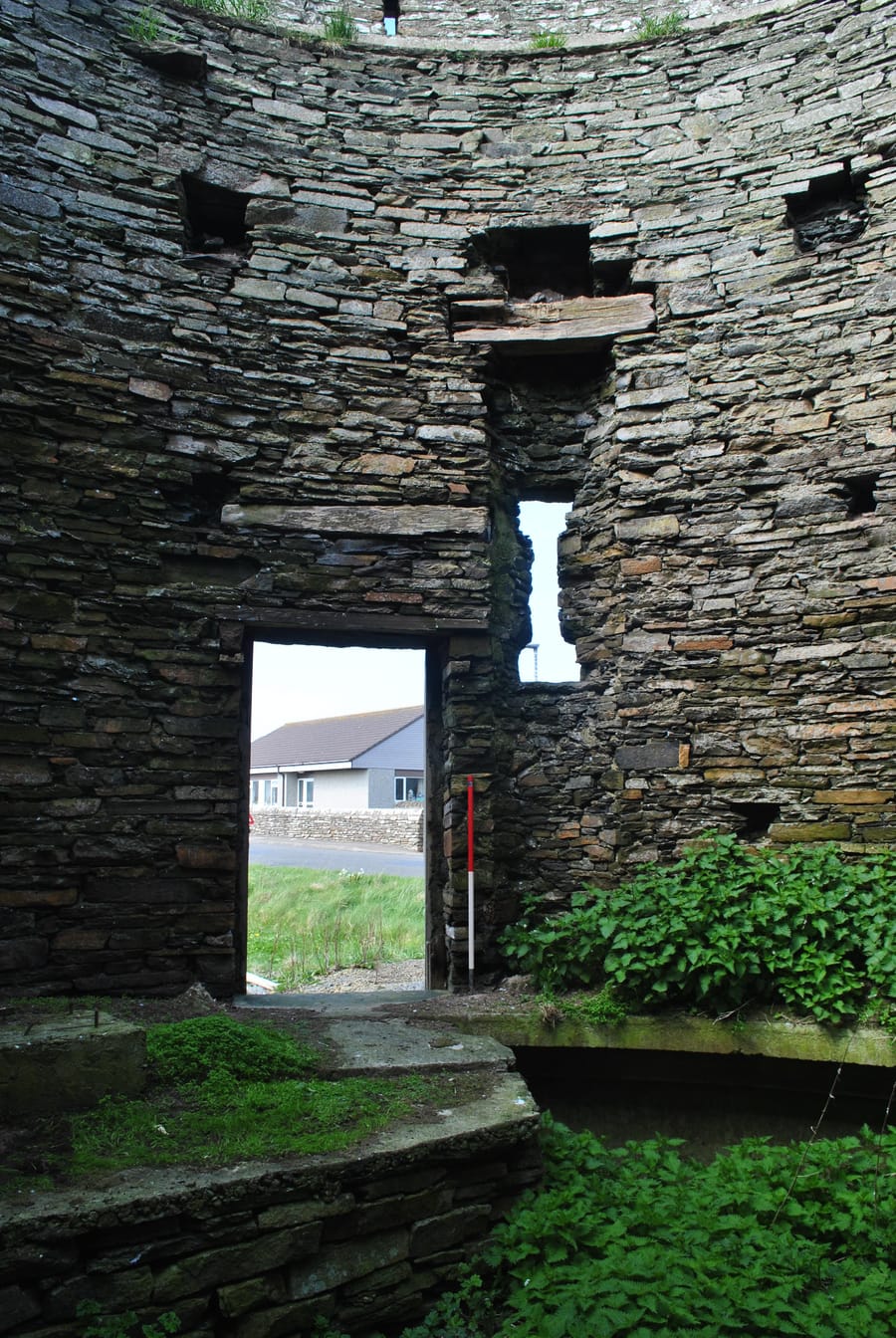
The surviving structure is a circular stone tower topped with a distinctive red-brick crown. Decorative details, including mock arrow-slit windows, heraldic panels and carved stonework, were deliberately incorporated to give the building the appearance of a medieval fortification. Inside, traces of the engineering infrastructure remain, including concrete rings, pipework and fixing points associated with the operation of the gas holder.
Today, the gasometer stands as a rare reminder of Victorian industrial innovation in the Northern Isles and of the Balfour family's vision for a modern, self-sufficient settlement.