Kirbuster Farm Museum
The last un-restored example of a traditional ‘Firehoose’ in Northern Europe
Key Facts
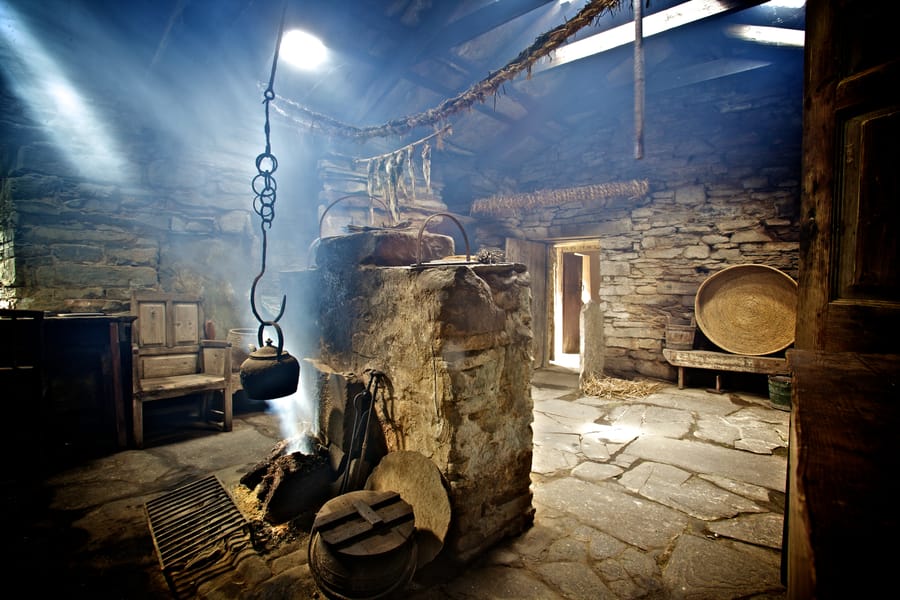
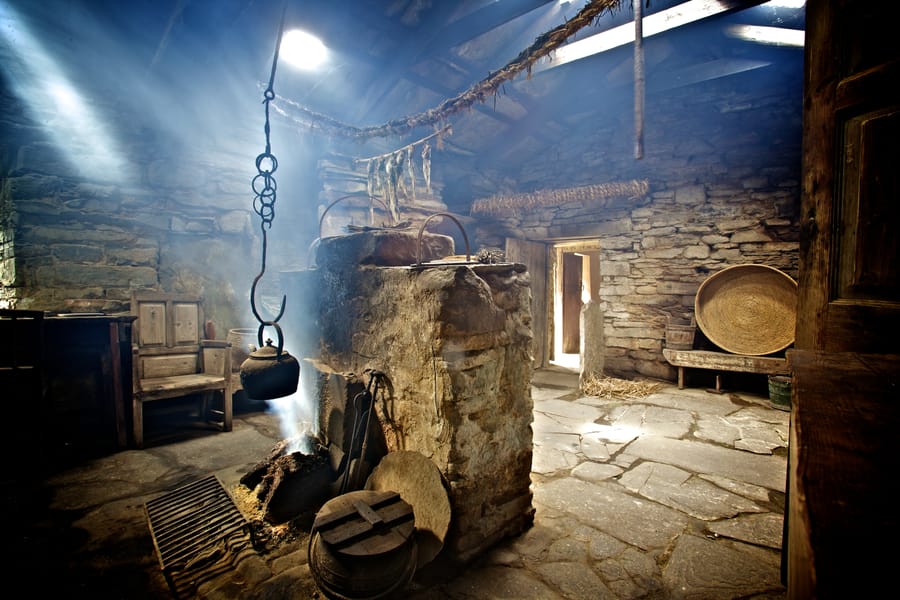
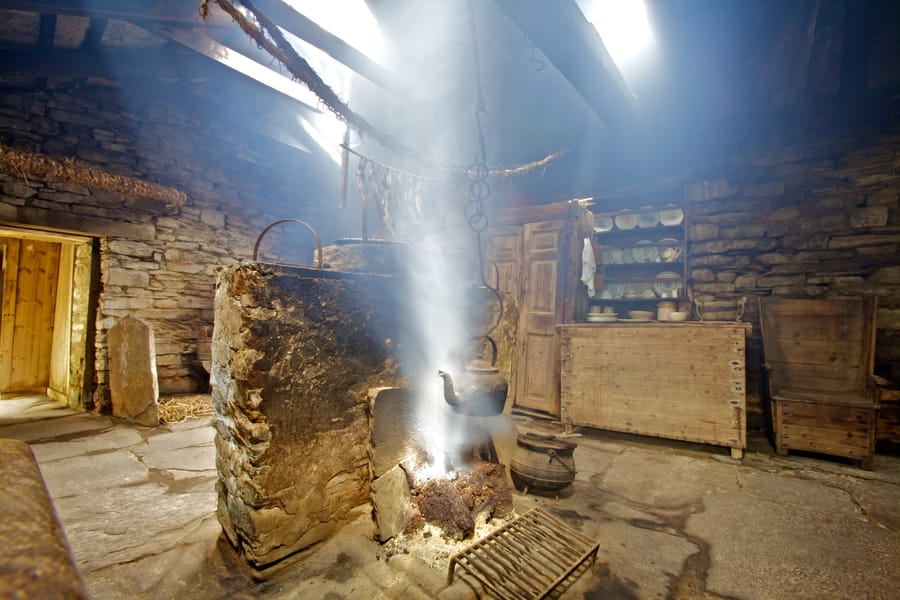
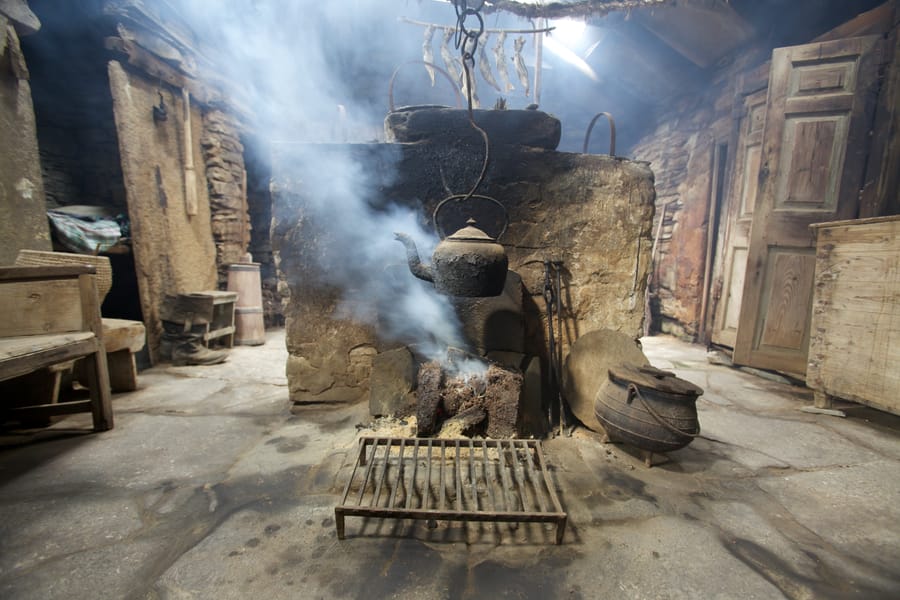
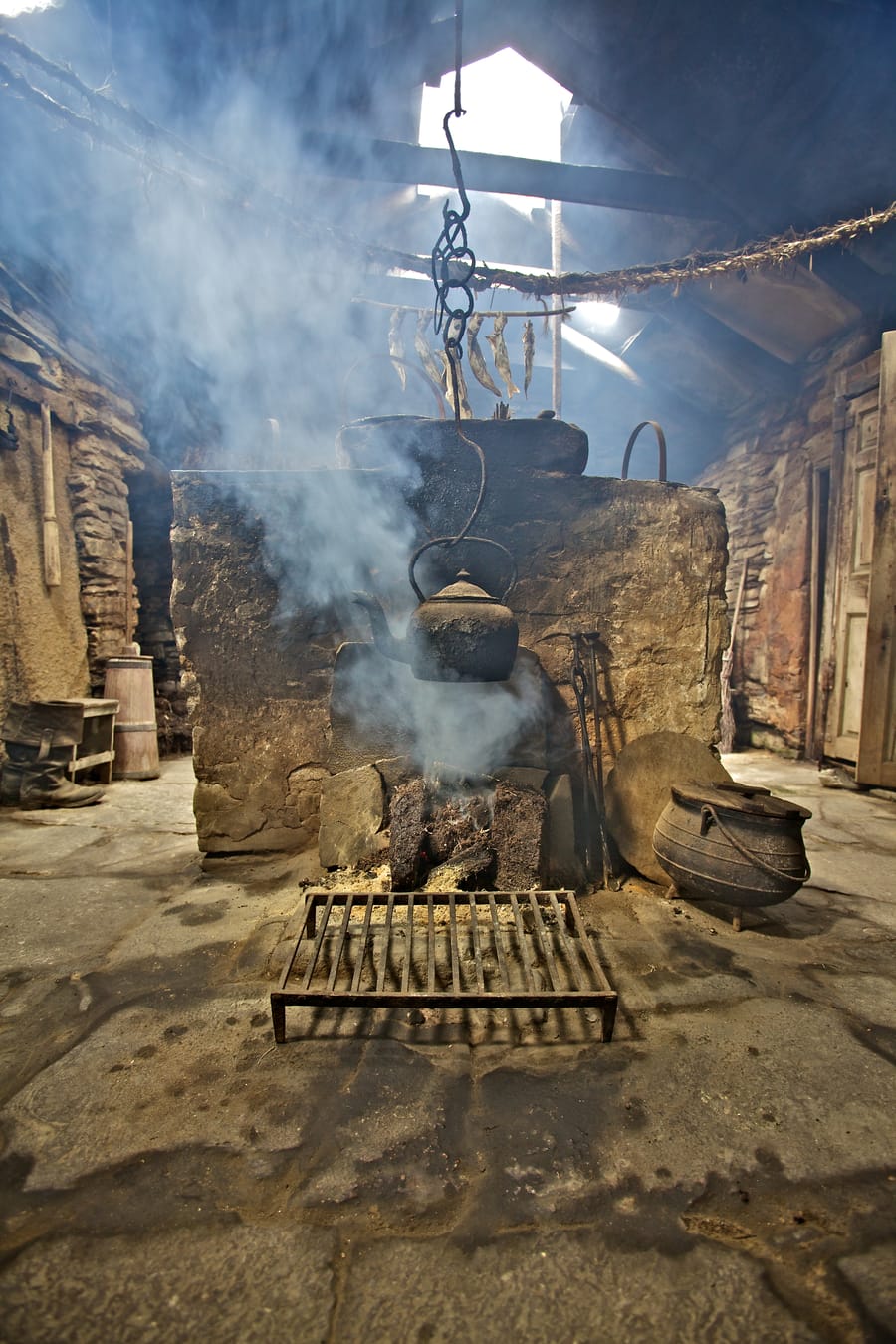
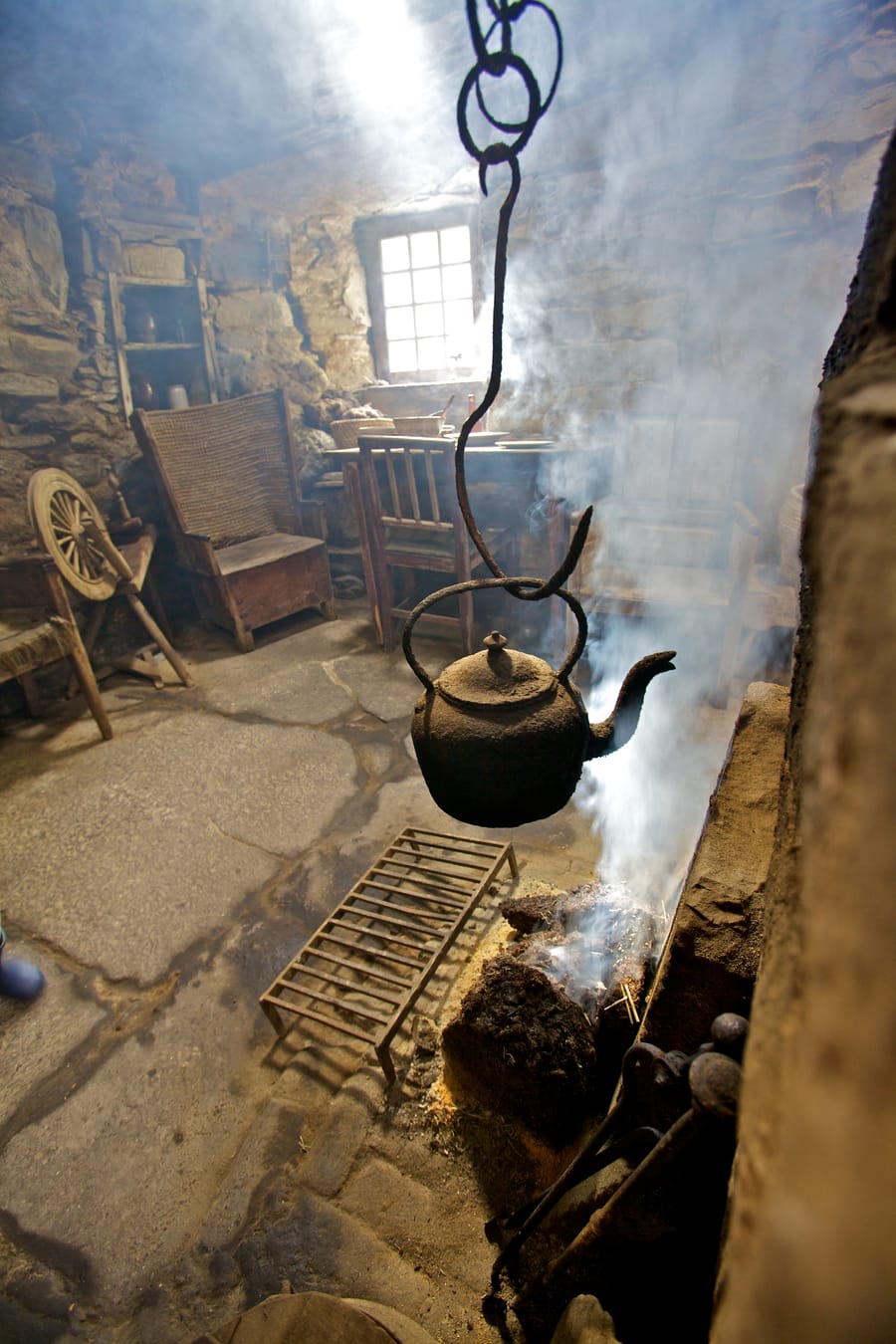
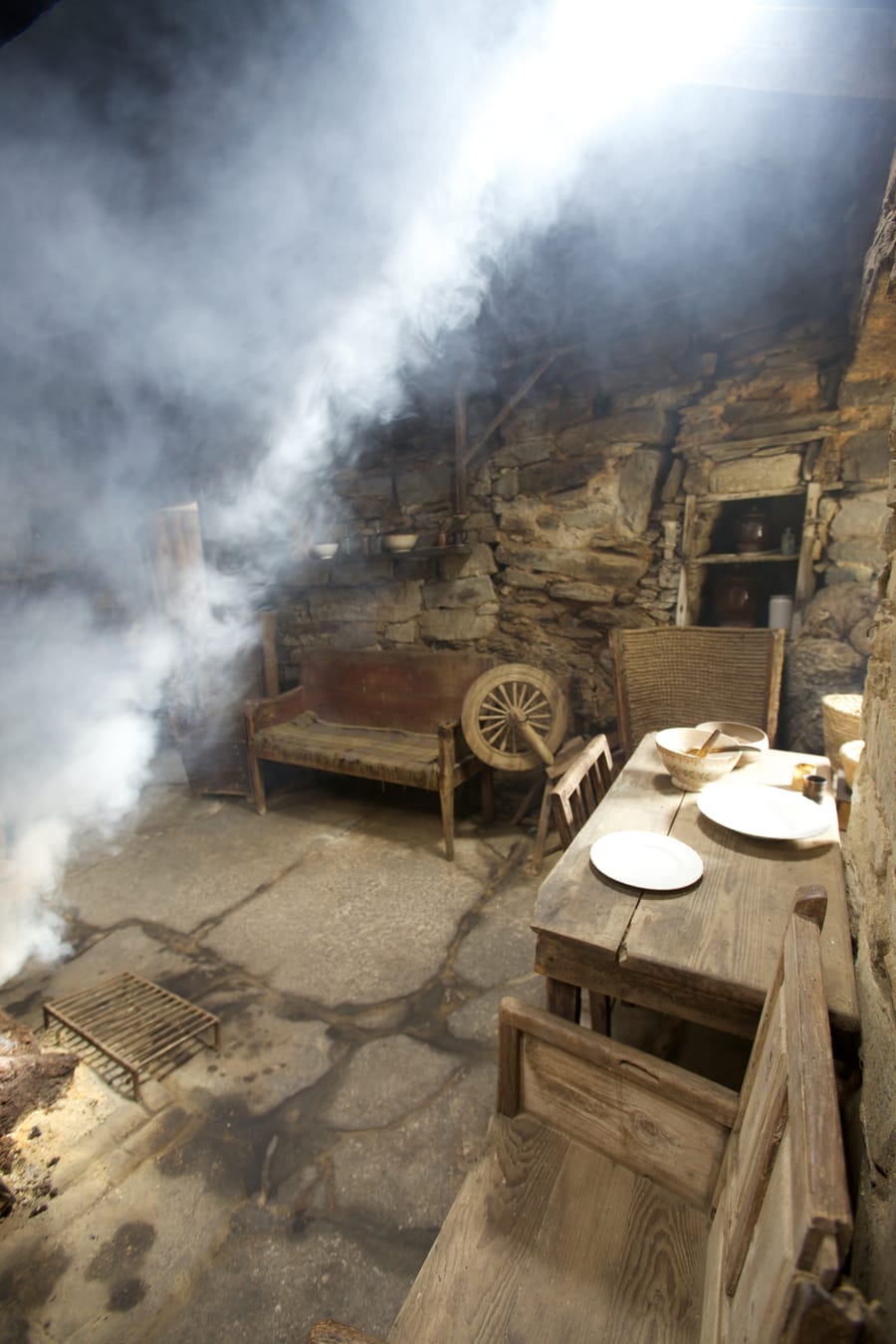
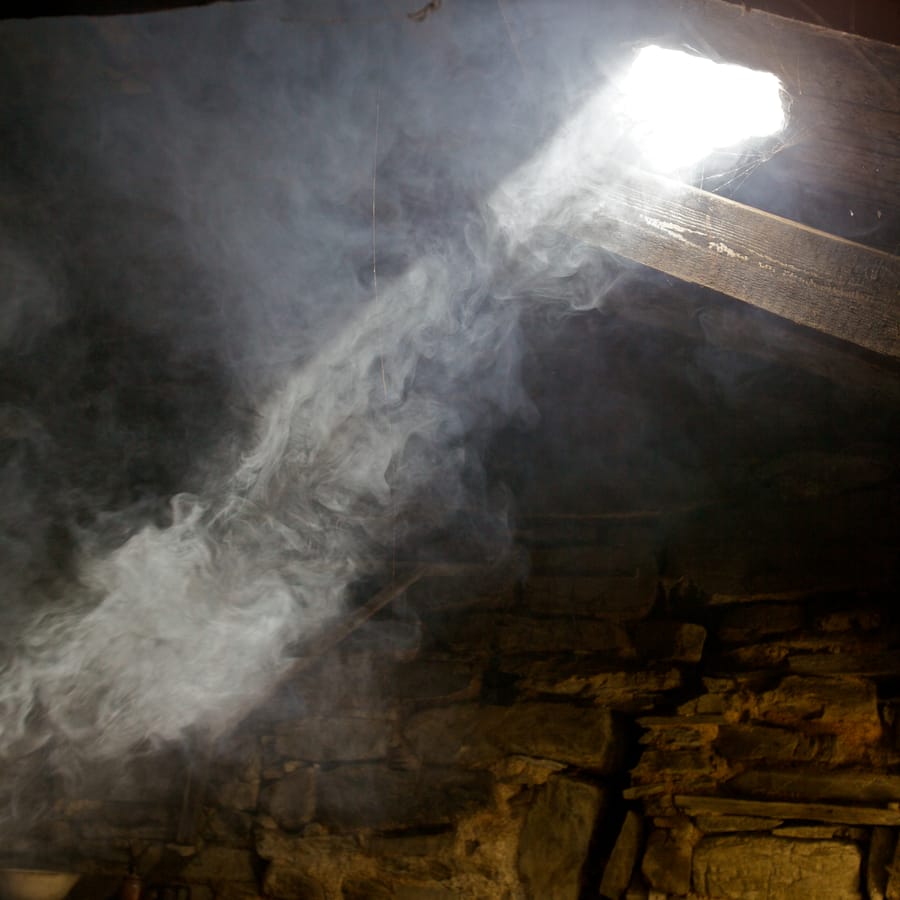
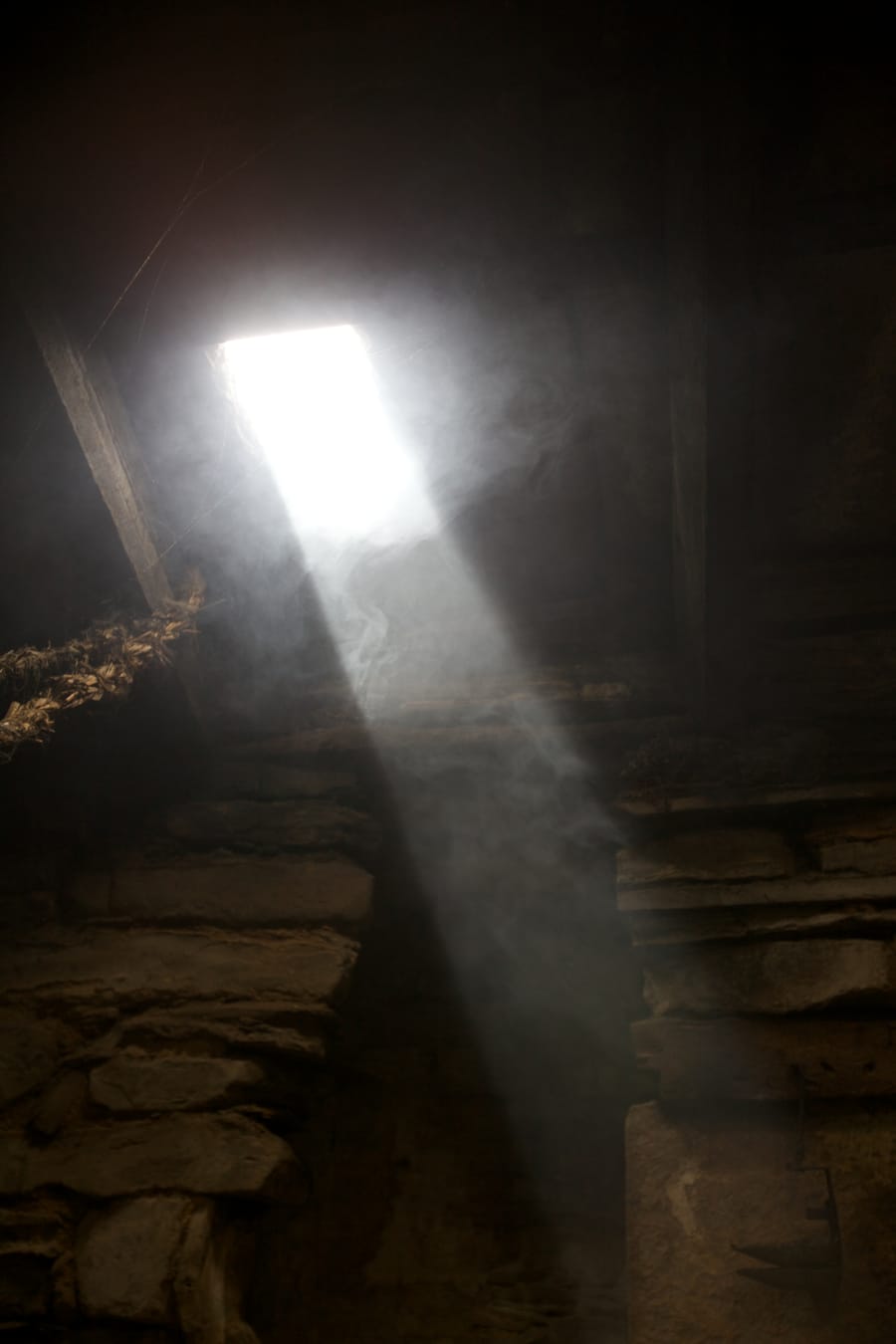
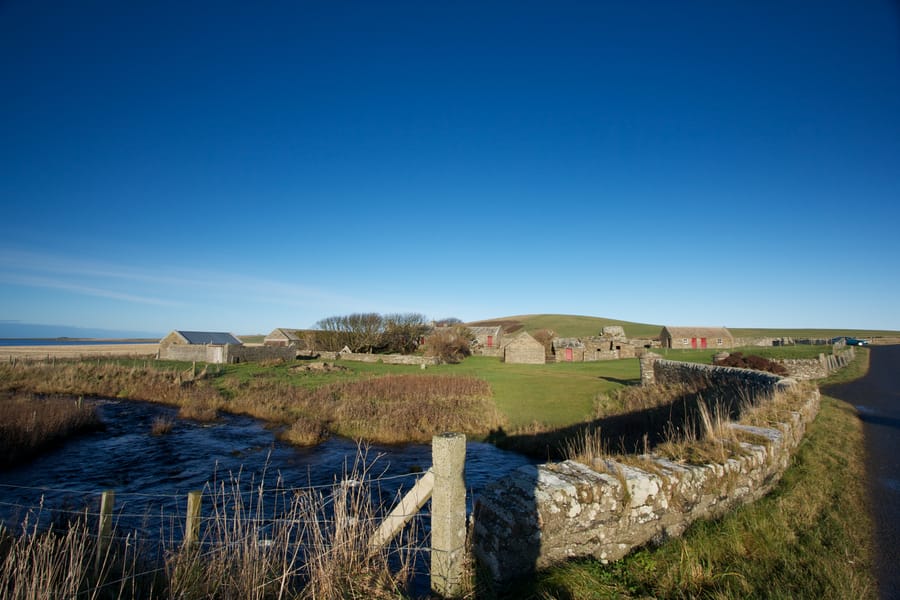
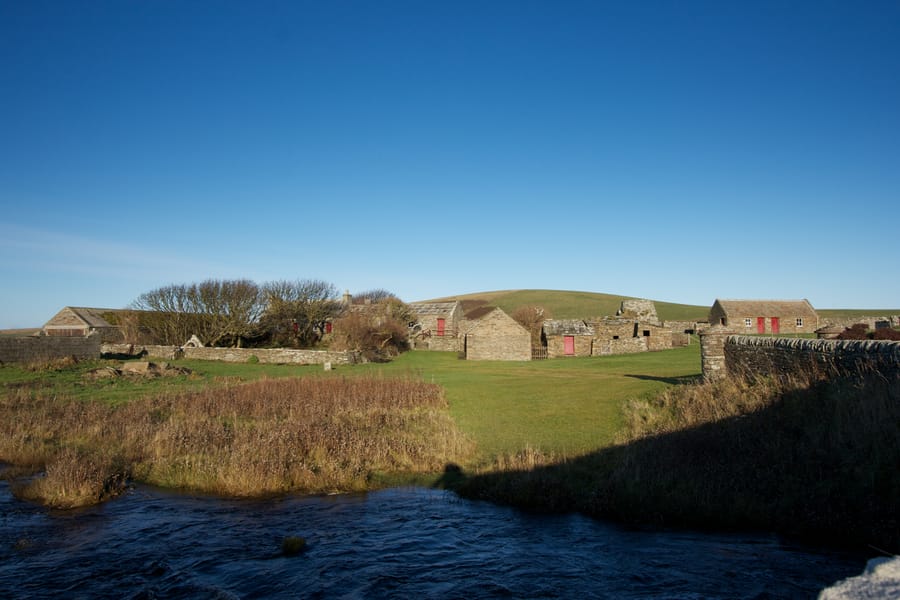
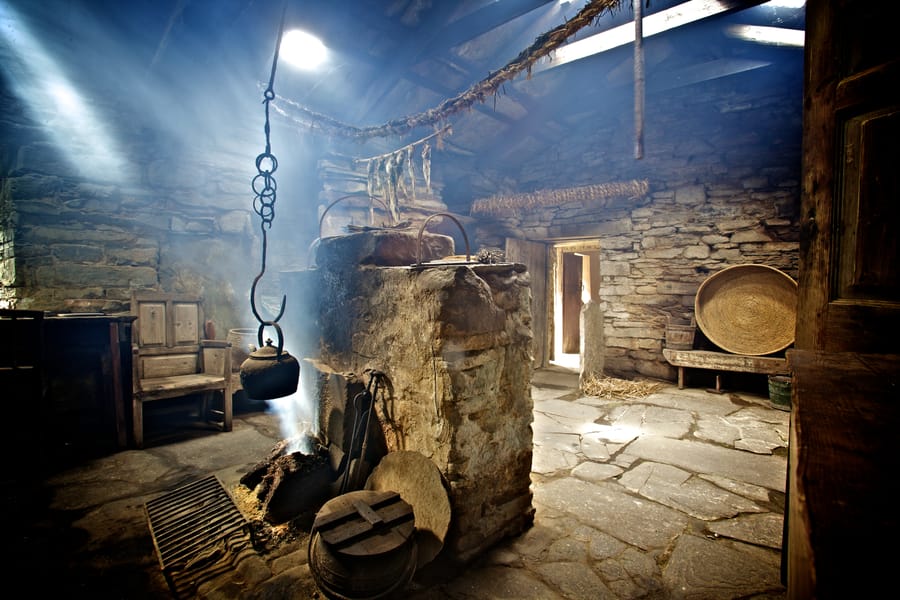
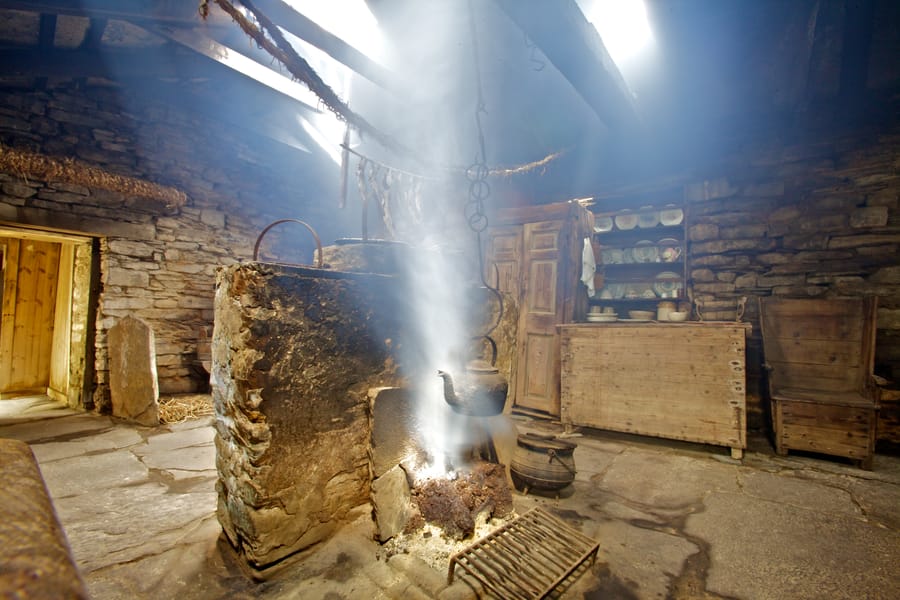
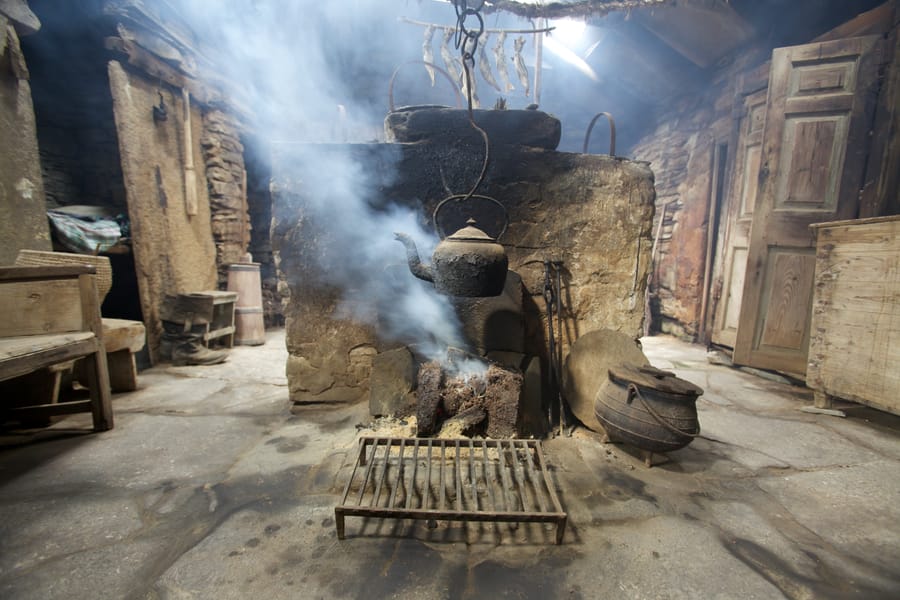
Kirbuster Farm Museum is a rare example of an open plan ‘firehoose’ with the oldest part dating back to 1595. Instead of having a chimney it has an offset hole in the roof which smoke would naturally gravitate to. The fuel that was most commonly used is peat, which unlike wood, is found in abundance in Orkney, this gives the room a very atmospheric smell and feel.
The original house is divided into two rooms, a bedroom and traditional open kitchen. The kitchen has several early features, including a stone bench, a box bed in the wall and a holed peg perhaps used for tethering animals. A peat neuk in the wall was used for storing fuel for the fire. The room is split in two, (the inbye and ootbye) by the central hearth fire back (a low wall behind the fire). Smoke escapes through a square smoke-hole in the roof. The room would have been smoky – something you can experience when you visit as the peat fire is usually lit. More modern extensions were added to the house in 1723 according to the date stone above the door and a milk house was added on one side in the 20th century.
Peat was used as the main fuel, cut from the nearby Birsay Moors. Turf, animal dung and seaweed were also used as fuel in Orkney in areas were peat wasn't as available. For example, some island farms had a ‘scone hoose’ a small stone-built structure used to store dried dung. Coal replaced burning peat in the late 19th century in Orkney, especially in Kirkwall and Stromness with cheaper imports by sea.
Inside farm buildings in Orkney, lighting would have been provided by crusie lamps, burning whale or seal oil. At Kirbuster, you can see a lit crusie lamp in the kitchen and look out for the whale bones outside.
Many farms in Orkney used Lucas Freelite windmills to pump water and later to generate electricity. In the 20th century, paraffin generators were used for lighting before mains electricity arrived. This was as late as 1983 in North Ronaldsay.